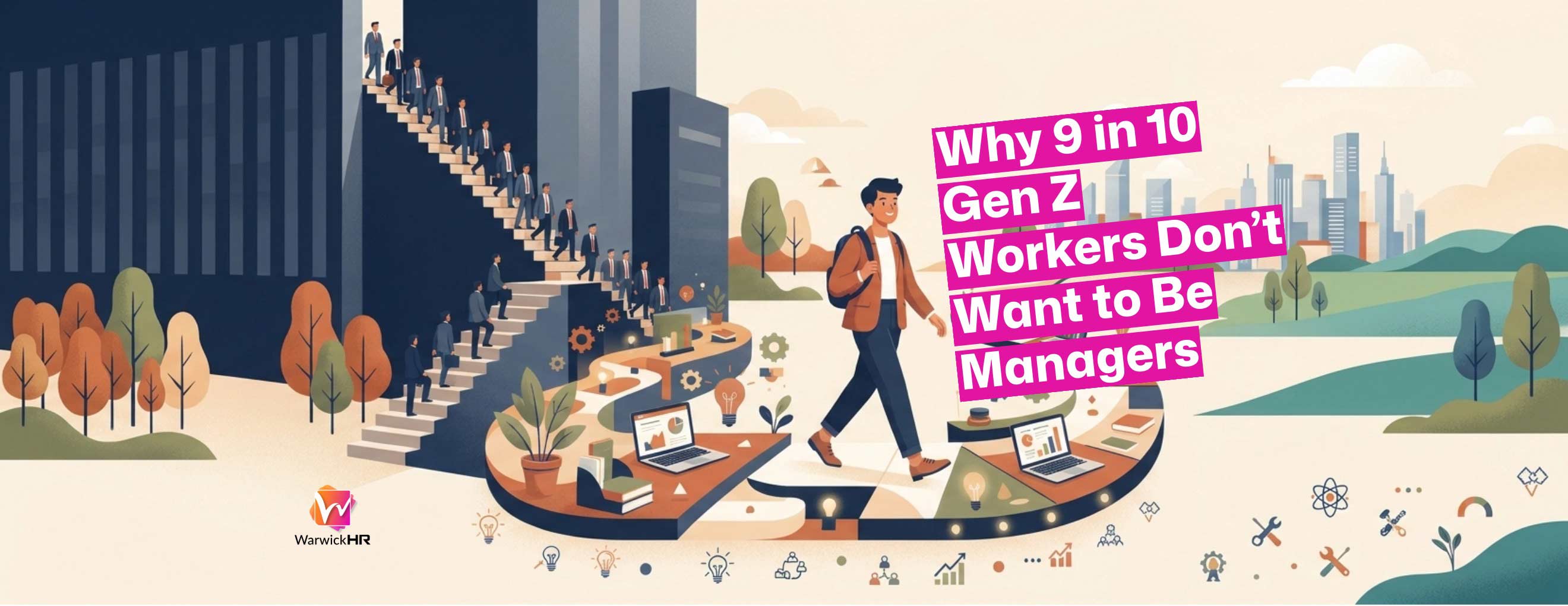
Why 9 in 10 Gen Z Workers Don’t Want to Be Managers (And What HR Should Do About It)
For decades, the traditional career path followed a predictable script: work hard, get promoted, and eventually manage a team. Moving into management was the ultimate badge of success—and usually the only way to earn a meaningful pay rise.
Today, that script is being torn up.
Recent workforce research shows that nine in 10 Gen Z employees do not want to manage others. Known across HR circles as "conscious unbossing," this shift is leaving many people teams worried about a looming leadership vacuum.
However, treating this trend as a lack of ambition misses the real issue. Gen Z isn’t rejecting career progression—they are rejecting a broken model of middle management.
Why Younger Workers Are Opting Out of Management
To understand why Gen Z is stepping away from the traditional ladder, HR leaders need to look at what management looks like from the outside:
- High stress, low reward: Middle managers are frequently squeezed between senior leadership targets and frontline team needs. For many younger workers, the modest salary increase tied to a first-time manager role simply doesn't justify the spike in stress and responsibility.
- The "accidental manager" trap: Too often, high-performing specialists are promoted into people management without proper training or support. Gen Z has watched older colleagues struggle with burnout in these roles and decided the trade-off isn't worth it.
- A new definition of success: Rather than chasing job titles or authority over others, younger employees place higher value on autonomy, financial stability, mental wellbeing, and building deep, transferable skills.
The Risk for Organisations
If businesses ignore this shift and keep their current promotion structures intact, they face two major problems:
- Reluctant leaders: Pushing uninterested employees into management leads to poor team morale, low engagement, and higher turnover.
- A talent drain: If managing people is the only route to seniority and higher pay, your strongest technical and creative specialists will leave for competitors—or freelance careers—where their individual expertise is rewarded.
3 Ways HR Can Adapt Your Career Pathways
"Unbossing" doesn't mean your organisation will run out of leaders. It means HR needs to build better ways for people to grow—and make management a genuinely attractive choice for those who do want it.
1. Build Dual Career TracksStop treating people management as the only path to seniority. Create parallel "Individual Contributor" (IC) tracks that allow specialists to advance in pay, status, and influence without taking on direct reports. Make sure a Principal Engineer or Lead Strategist is valued just as highly as a Head of Department.
2. Fix the Middle-Management ExperienceAudit what you are actually asking your frontline managers to do. Are they drowning in HR admin, compliance paperwork, and endless status meetings? Strip away unnecessary bureaucracy, ensure management pay bands properly reflect the workload, and give new managers dedicated coaching before they take on a team.
3. Redefine What Leadership Looks LikeNot everyone wants to be a line manager, but many Gen Z workers are eager to lead projects, mentor junior peers, or drive innovation. Give employees opportunities to take ownership of initiatives and develop leadership skills without forcing them into formal line-management structures.
The Bottom Line
The "unbossing" trend isn't a sign that Gen Z doesn't care about their careers. It’s a sign that they are paying close attention to how work actually works. By separating career progression from people management, HR teams can keep their best specialists engaged while ensuring future managers step into their roles by choice, not obligation.
Contact us today for more info or check out our Employee Relations section